
The Agentic AI Governance Playbook
Most credit unions and community banks are already running AI agents. Fewer than one in eight have a governance program to match. This playbook gives boards and executive teams the framework, the policy templates, and the 180-day rollout plan to close that gap — before the examiner does.
Read More
Why Agentic AI is Replacing the Collections Queue
How credit unions and community banks are using AI to recover more debt, faster - without adding headcount.
Read More
The ROI of Agentic AI in the Contact Center
A breakdown of the cost savings, efficiency gains, and revenue impact AI delivers in banking contact centers.
Read More
A Practical Guide to Scaling Self-Service AI in Credit Unions & Banks
A step-by-step guide to expanding AI across your contact center - from first deployment to full automation.
Read More
Top 8 Contact Center Requests Perfect for Agentic AI Automation
The highest-volume call types credit unions and community banks should automate first - and why.
Read More
What is Agentic AI? (And Why Does It Matter?)
A plain-language explainer on what agentic AI is, how it differs from basic chatbots, and what it means for banking.
Read More
Not All AI is Equal: AI Education Hub for Credit Unions and Community Banks
A guide to evaluating AI vendors - what to look for, what to avoid, and how to tell the difference.
Read More
C-Suite AI Guide: The AI Choice That Makes or Breaks the Banking Experience
What credit union and community bank executives need to know before selecting an AI platform.
Read More
How AI Powers the Full Lifecycle in Financial Services: Grow, Serve, Retain, Repeat
How AI supports every stage of the member and customer journey - from acquisition to retention.
Read More
AI with a Heart: How Financial Institutions Use AI Without Losing the Human Touch
How credit unions and community banks are deploying AI in a way that strengthens - not replaces - member relationships.
Read More
The 2025 Credit Union AI Trend Report: What's Rising, What's Fading, and What to Do About It
The trends shaping AI adoption in credit unions - and what leaders should prioritize in the year ahead.
Read More
The AI Impact Report: Real Results from Credit Unions & Community Banks
Benchmarks, stats, and real deployment data from credit unions and community banks using AI today.
Read More
The New Standard for Contact Center Security: AI, Caller ID & Device Biometrics
How leading credit unions are using layered AI authentication to stop fraud before it reaches an agent.
Read More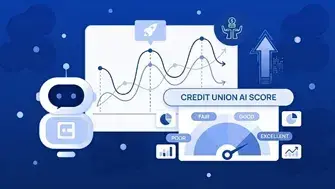
Credit Union AI Scorecard: Discover Your AI Member Service Maturity
Answer 10 questions and get a personalized readout of where your AI strategy stands and where to focus next.
Read More
Driving ROI with AI: The Executive Playbook for Scalable AI Member & Customer Service
A CFO-focused playbook for building a business case for AI in the banking contact center.
Read More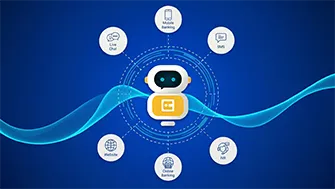
The New Service Standard: Why Omni-AI Outperforms Omni-Channel in Financial Services
The case for AI-first service delivery across voice, chat, and digital - and how to get there.
Read More
Beyond Traditional IVR: Transforming Customer Experience with Voice AI Agents
Why legacy IVR is holding your contact center back - and what Voice AI delivers instead.
Read More
Voice AI ROI Calculator: See How Much Your Institution Could Save
Enter your call volume and get an instant estimate of the cost savings Voice AI could deliver.
Read More