
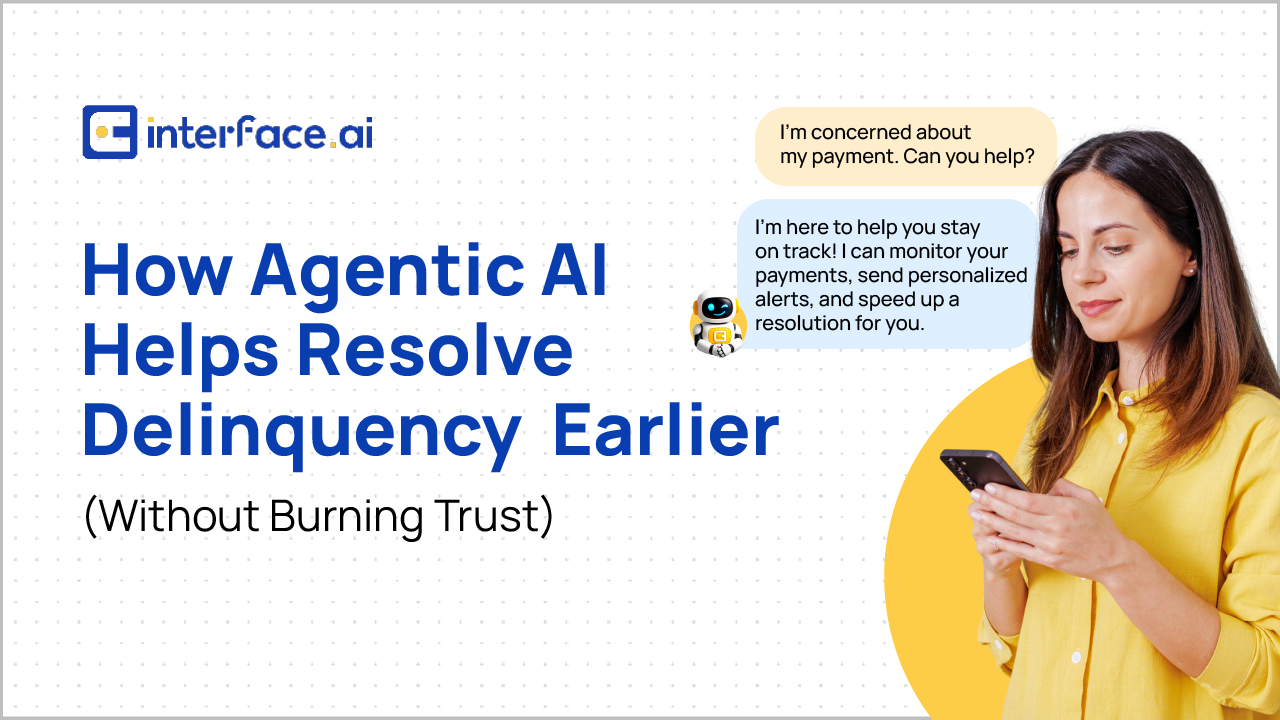
How Agentic AI Helps Resolve Delinquency Earlier (Without Burning Trust)
)
Collections officers at credit unions and community banks live in a constant balancing act: cure delinquency early enough to protect the portfolio, but do it in a way that protects the relationship.
The challenge is that the “right” outreach isn’t just about sending more reminders. It’s about coordinating the right message, through the right channel, at the right time – while staying compliant and respecting member preferences.
That’s where Agentic Smart Collections AI changes the game. Instead of a one-size-fits-all sequence, an agentic approach uses policy-aware AI agents to run a structured collections journey across outbound voice, two-way SMS, and two-way email – with seamless escalation to a human when it matters.Why early-stage delinquency is the moment that matters
In credit unions, total delinquency reported in Q3 2025 was 95 basis points – a reminder that even “small” shifts in delinquency can have real portfolio impact.
But the first 10–30 days are also when member outcomes are most salvageable. The member may have missed a payment because of timing, confusion, or a temporary hardship—not because they’ve disengaged. This is the window where outreach can still feel like service rather than enforcement.What “agentic” means in collections
In a collections context, “agentic” isn’t a buzzword. It means the AI can:
– Follow a playbook that’s different for credit cards vs. auto loans vs. HELOCs
– Decide the next best step within defined guardrails (policy + compliance)
– Hold a real conversation (not just broadcast messages), including capturing outcomes like a Promise-to-Pay
– Escalate to a human agent when the situation demands it
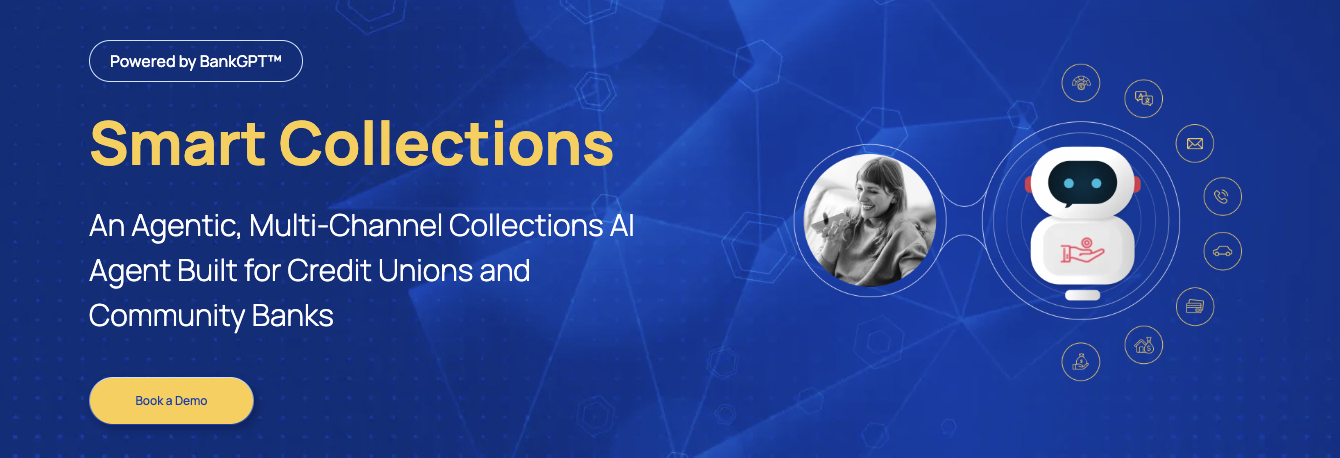
Smart Collections is built as a coordinated set of specialized, multi-channel AI agents.
– Outbound Voice AI Agent: Places calls, verifies identity, discusses delinquency, captures Promise-to-Pay, escalates as needed
– Two-Way SMS AI Agent: Supports inbound/outbound texting with STOP/opt-out handling, intent detection, and secure payment links
– Two-Way Email AI Agent: Manages templates, deliverability safeguards, and reply handling to keep the journey moving
Instead of staff stitching together vendors and manual follow-ups, these agents work together to create consistency across channels.The “sensitive area” problem: Collections can’t be a black box
Collections is one of the most sensitive operating areas in community finance. That’s why any AI-driven approach must be designed to meet the realities of regulated communication:
– Quiet hours and frequency caps aren’t optional
– Member channel preference must be respected
– Opt-outs must be processed immediately
– Conversations need to be auditable, coachable, and measurable
Smart Collections addresses this with a unified platform approach that includes a Policy Engine (to enforce rules like contact frequency caps and quiet hours) and Automated QA (to score interactions for compliance, tone, and effectiveness).Practical playbook ideas collections teams can implement fast
If you’re evaluating an agentic approach, here are three practical patterns that tend to work well in credit unions and community banks:
1) “Early gentle nudge” for overdraft/negative balance
– Start with a short, friendly SMS (with opt-out compliance)
– Offer a secure payment link and clear options
– Escalate to a voice call only if there’s no response
2) “Promise-to-Pay capture” for credit card delinquency
– Use outbound voice to verify identity and capture a specific commitment date
– Follow up via SMS/email confirmation (so the member has it in writing)
– If the promise is missed, route to a tailored next step rather than restarting the journey
3) “Asset-aware” outreach for secured loans (auto/RV/boat)
– Use a more structured script that stays consistent across channels
– Detect hardship signals and route to a human agent when needed
– Keep the tone factual and respectful, because reputational risk is real
What to measure (beyond dollars collected)
To understand whether Smart Collections AI is improving outcomes, don’t only track dollars. Track quality and coverage:
– Right-party contact rate by channel
– Promise-to-Pay rate and kept vs. broken PTP
– Time-to-first-contact after delinquency trigger
– Human escalation rate (and why escalations occur)
– Opt-out rate and channel preference distribution
– QA scores (tone + compliance + effectiveness)
When these metrics improve, you’re not just collecting more – you’re reducing operational load and creating a more consistent member experience.
A modernization path that doesn’t overload your team
Collections teams are already stretched. The goal isn’t “more work with new tools.” The goal is earlier action with less manual chasing, using a self-service administration console so non-technical staff can manage journeys, templates, policies, and escalations without constant engineering tickets.
That’s the promise of Agentic Smart Collections AI: resolve delinquency earlier while preserving relationships – at scale. You can learn more about Smart Collections and book a personalized demo below.
AI Insights for Credit Union & Community Bank Leaders
Join the monthly newsletter for all the latest industry updates
The Difference Between AI that Answers and AI that Acts – and Why it Matters for Credit Unions
Paid
Members
Public
A member calls to move money between accounts. Your AI answers. It tells her the balance. It confirms that yes, transfers are something the credit union offers. It suggests she log into online…
How Agentic AI is Moving the Efficiency Ratio for Credit Unions
Paid
Members
Public
In a CUInsight webinar featuring Navigator Credit Union and Red Rocks Credit Union, the conversation focused on what AI in the contact center looks like in production—not in pilots or theory, but at…