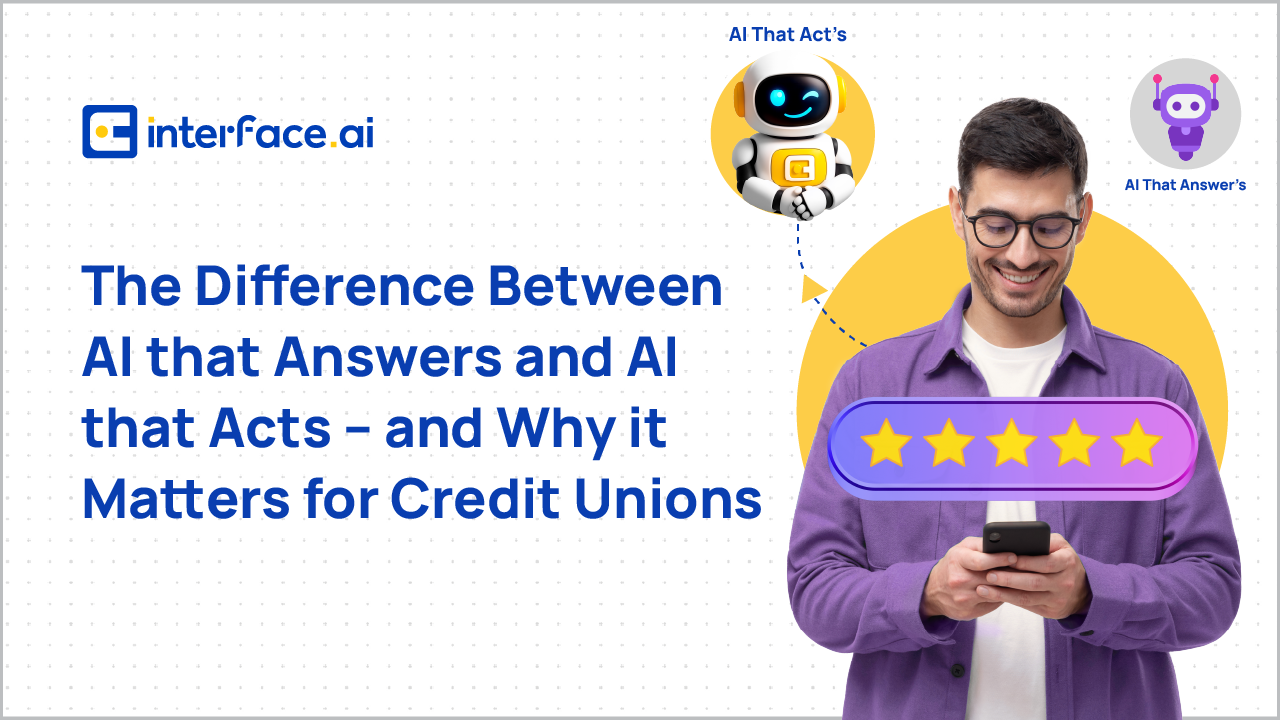
The Difference Between AI that Answers and AI that Acts – and Why it Matters for Credit Unions
A member calls to move money between accounts. Your AI answers. It tells her the balance. It confirms that yes, transfers are something the credit union offers. It suggests she log into online banking.
She hangs up and calls back to speak with an agent.
That’s not an AI problem. That’s an answerbot problem. And a lot of credit unions are sitting on exactly that: a system that sounds like AI but functions like a very fast FAQ page.
The difference between AI that answers and AI that acts is where the real ROI lives. It’s also what separates the credit unions getting measurable results from the ones still waiting for their pilot to pan out.
What is Agentic AI, and How is it Different from a Chatbot?
Agentic AI is AI that completes tasks autonomously, not just AI that responds to questions.
A traditional chatbot or voice AI is built on intent detection: identify what the member is asking, serve up a response, escalate if it gets complicated. Agentic AI is built on task completion: identify what the member needs to accomplish, take the steps required, and finish it without a human in the loop.
In a credit union contact center, that means:
- Processing a loan payment, not just confirming one is due
- Reporting a lost card, ordering a replacement, and updating linked autopays, start to finish
- Walking a member through a dispute and submitting the intake
- Completing an address change after identity verification
- Delivering a payoff quote and accepting the payment in the same call
These aren’t future capabilities. They’re live deployments happening at credit unions today.
Why Most Credit Union AI Deployments Plateau
Most credit unions that deployed chatbots or basic voice AI in the last three to five years saw early wins. Call deflection went up, simple FAQs got handled. But results tend to plateau around the 18-month mark. The same complaints surface:
- Members still escalate for tasks that should be self-service
- CSAT scores level off or dip
- Agents keep handling the same high-volume call types on repeat
The root cause is almost always the same: the AI can answer but it can’t act. The moment a member needs something done, not explained but done, they route to an agent.
At that point, the AI is functioning as an expensive IVR. It filters calls. It doesn’t resolve them.
The Hidden Cost: What Happens at Escalation
There’s a cost that rarely shows up in deflection metrics: the quality of the handoff.
When a member escalates from an answerbot to a live agent, the agent often starts from zero. The member repeats everything. Handle time goes up. Frustration goes up.
Agentic AI changes the handoff. Because the AI was completing work and not just talking, it generates a real-time summary that travels with the interaction. The agent picks up already knowing the issue, what the member tried, and what’s outstanding.
That shift from a cold transfer to a context-rich handoff typically cuts handle time significantly. At scale, that compounds fast.
The Use Cases Generating the Most ROI Right Now
Credit unions seeing the strongest results are deploying agentic AI on their highest-volume, process-heavy call types. The use cases with the fastest payback:
Loan payments and payoff quotes. Members can get a payoff amount and process the payment in one interaction, no agent required.
Card management. Lost or stolen card? AI reports it, orders the replacement, and updates autopay, end to end.
Dispute intake. AI collects the required information, verifies identity, and submits the intake accurately every time.
Account and contact updates. Address changes, email updates, beneficiary changes, handled through verified, automated flows.
Early-stage collections outreach. AI handles delinquency conversations, presents payment options, and processes arrangements on the spot, preserving the member relationship while improving recovery rates.
What Agentic AI Means for Contact Center Staffing
Agentic AI doesn’t eliminate contact center staff. It changes what they spend their time on.
When AI handles end-to-end task completion on routine interactions, agents stop cycling through payment confirmations and card replacements. They shift toward complex needs, escalated situations, and relationship-driven conversations that actually require a human.
Credit unions that have made this shift are seeing it in their efficiency ratios. They’re also seeing it in staff retention. Agents doing more meaningful work tend to stay longer.
How to Tell if Your AI Can Actually Do Anything
If you’re evaluating a new vendor or auditing a deployment that’s plateaued, these questions cut through quickly:
Can the AI complete transactions, or only answer questions about them? There’s a meaningful difference between “I can tell you your balance” and “I can process your payment.”
What does containment actually mean in their metrics? Deflection and resolution are not the same thing. Push for resolution rate: the percentage of interactions fully completed without agent involvement.
What does the escalation handoff look like? Does context transfer, or does the member start over?
What are your top 10 call types, and can the AI handle all 10 end to end? A partial answer here tells you a lot about where the gaps are.
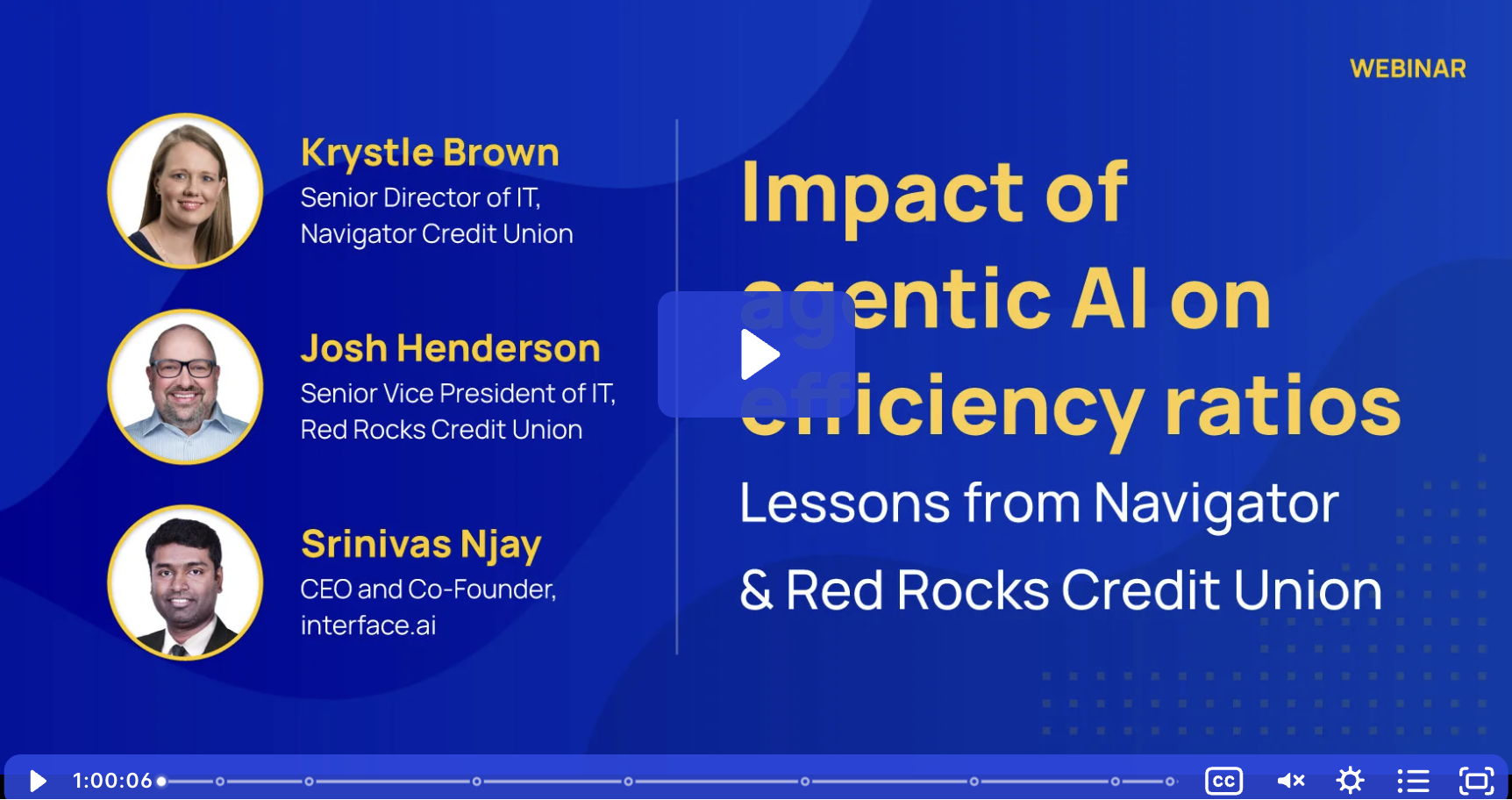
Want to see what agentic AI looks like in a live credit union contact center? Hear from Red Rocks Credit Union and Navigator Credit Union that have both deployed interface.ai’s Agentic Voice AI and reveal the impact it has had on their contact center operations.
AI Insights for Credit Union & Community Bank Leaders
Join the monthly newsletter for all the latest industry updates
How Agentic AI is Moving the Efficiency Ratio for Credit Unions
Paid
Members
Public
In a CUInsight webinar featuring Navigator Credit Union and Red Rocks Credit Union, the conversation focused on what AI in the contact center looks like in production—not in pilots or theory, but at…
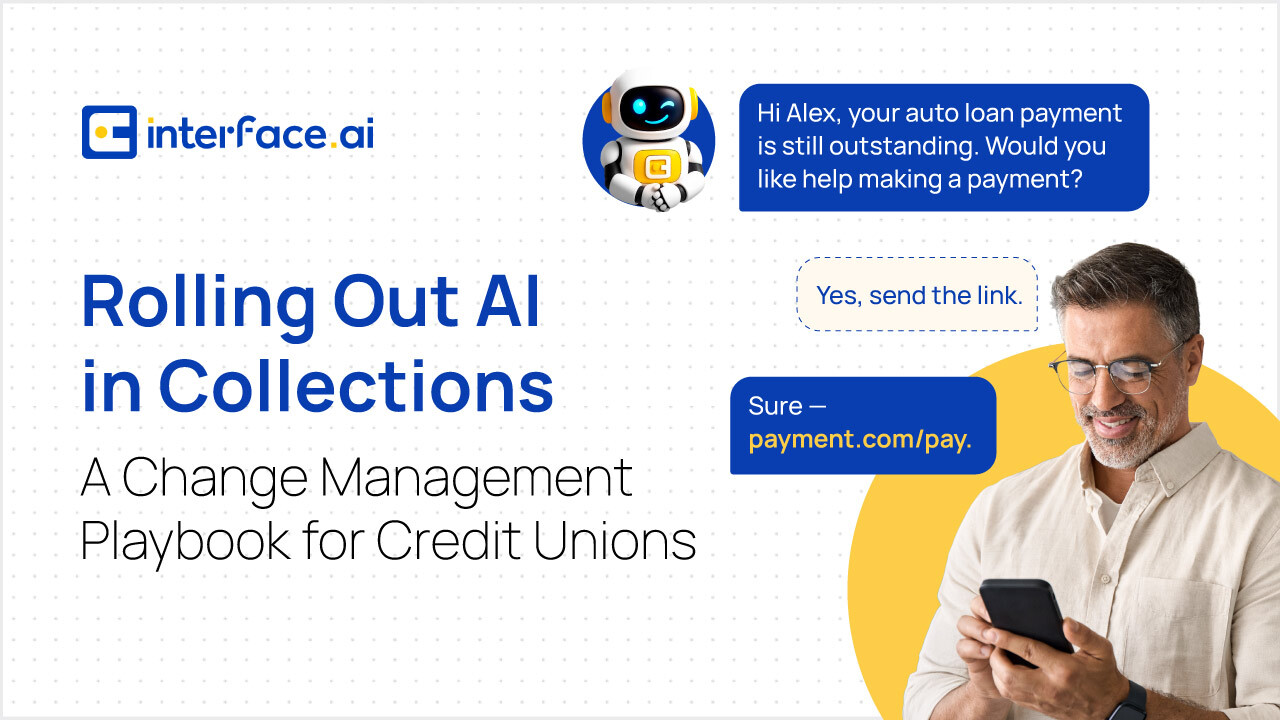
Rolling Out AI in Collections: A Change Management Playbook for Credit Unions
Paid
Members
Public
Collections leaders at credit unions face a constant tension: you need to engage delinquent members earlier – when cures are still likely – but every outreach attempt carries reputational and regulatory risk. At…