How Agentic AI is Moving the Efficiency Ratio for Credit Unions
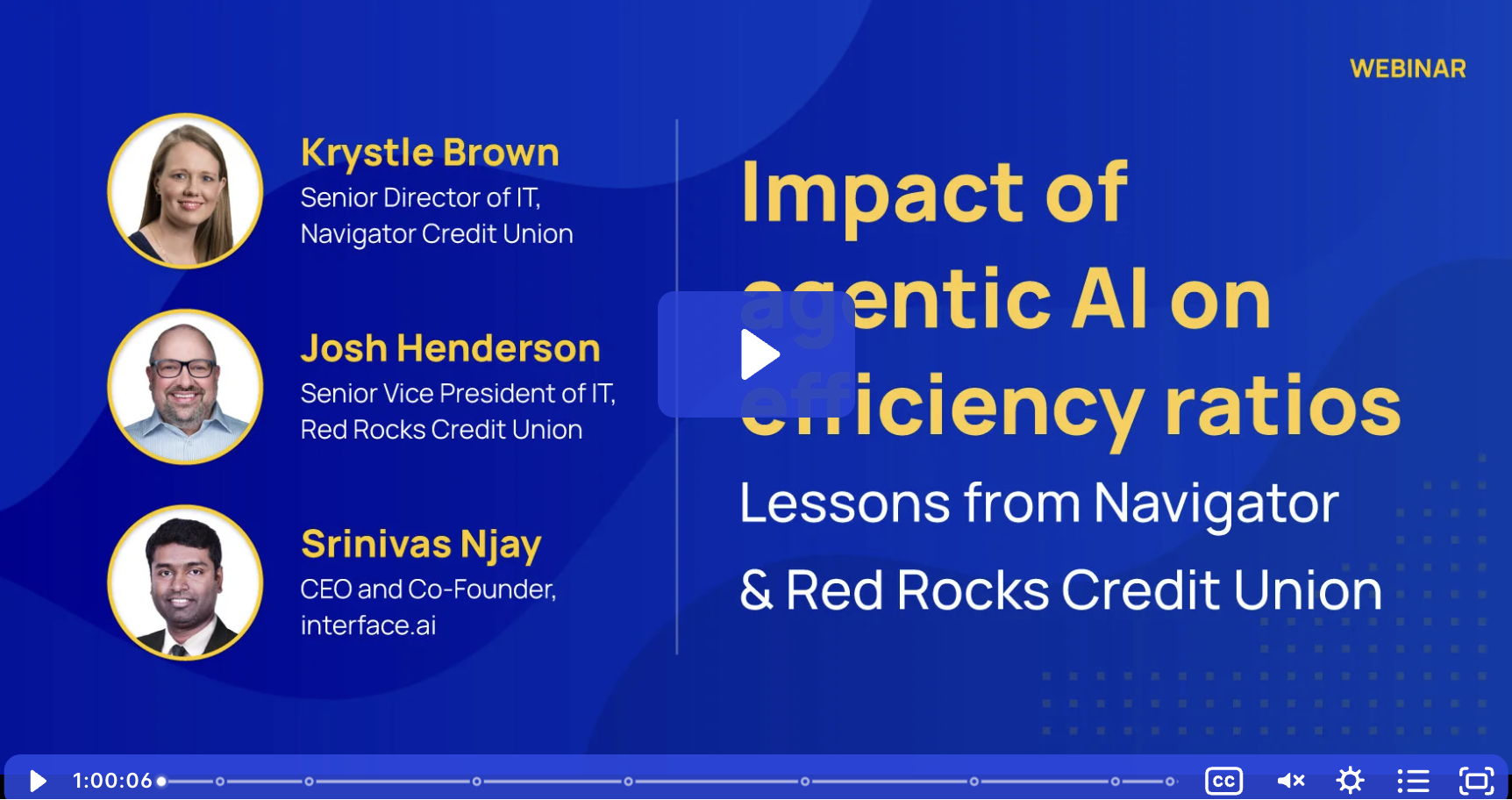
In a CUInsight webinar featuring Navigator Credit Union and Red Rocks Credit Union, the conversation focused on what AI in the contact center looks like in production—not in pilots or theory, but at scale.
At Navigator Credit Union, that scale is already significant: “70+ percent of our calls have the Voice AI agent answering at least a question.”
But as both institutions made clear, that level of automation isn’t the outcome – it’s a milestone.
Because once AI is handling a large share of interactions, the real question becomes: is it changing how work gets done – and what it costs to serve a member?
What Agentic AI Does That Earlier AI Couldn’t
Both Navigator and Red Rocks Credit Union have been investing in AI in the contact center for many years, including conversational AI and newer generative AI capabilities.
Those tools delivered value. They improved member experience, helped answer more questions, and made interactions more efficient. But over time, both teams saw the same pattern: the gains were real, but incremental.
AI could support the interaction, but it still wasn’t completing the work behind it. Calls would begin with AI, but often still required a human to finish the request. And as a result, the underlying cost structure didn’t materially change.
That’s the limitation both credit unions ran into. What’s different now – and what they highlighted in the webinar – is the move to agentic AI powering voice interactions.
Instead of just responding or guiding conversations, the AI can now take action: executing workflows, navigating systems, and resolving member requests end-to-end.
That shift – from generative and assistive AI to agentic execution – is what turns AI from a layer of efficiency into something that can actually impact the efficiency ratio.
Where the Impact Shows Up First
For both credit unions, the impact isn’t theoretical – it’s already starting to show up in how their operations are run.
The most immediate change isn’t headcount reduction. It’s something more practical: “From an efficiency standpoint, we’ve seen more like cost avoidance. We’ve been able to maintain service levels without adding staff. We’re repurposing staff.”
That’s a critical signal. Instead of scaling teams alongside demand, they’re able to stabilize. Instead of adding resources to handle volume, they’re shifting existing teams toward higher-value work.
Over time, that’s what begins to materially change the efficiency ratio.
Watch How This Plays Out in Practice
This blog captures the key ideas, but the full conversation goes deeper into how this shift is happening inside real credit unions.
In the webinar, Navigator Credit Union and Red Rocks Credit Union share:
- How their approach to AI has evolved over time
- Where they’re seeing measurable operational impact
- What it takes to move from partial automation to full resolution
Watch the full webinar to see how credit unions are turning agentic AI into measurable efficiency gains
AI Insights for Credit Union & Community Bank Leaders
Join the monthly newsletter for all the latest industry updates
The Difference Between AI that Answers and AI that Acts – and Why it Matters for Credit Unions
Paid
Members
Public
A member calls to move money between accounts. Your AI answers. It tells her the balance. It confirms that yes, transfers are something the credit union offers. It suggests she log into online…
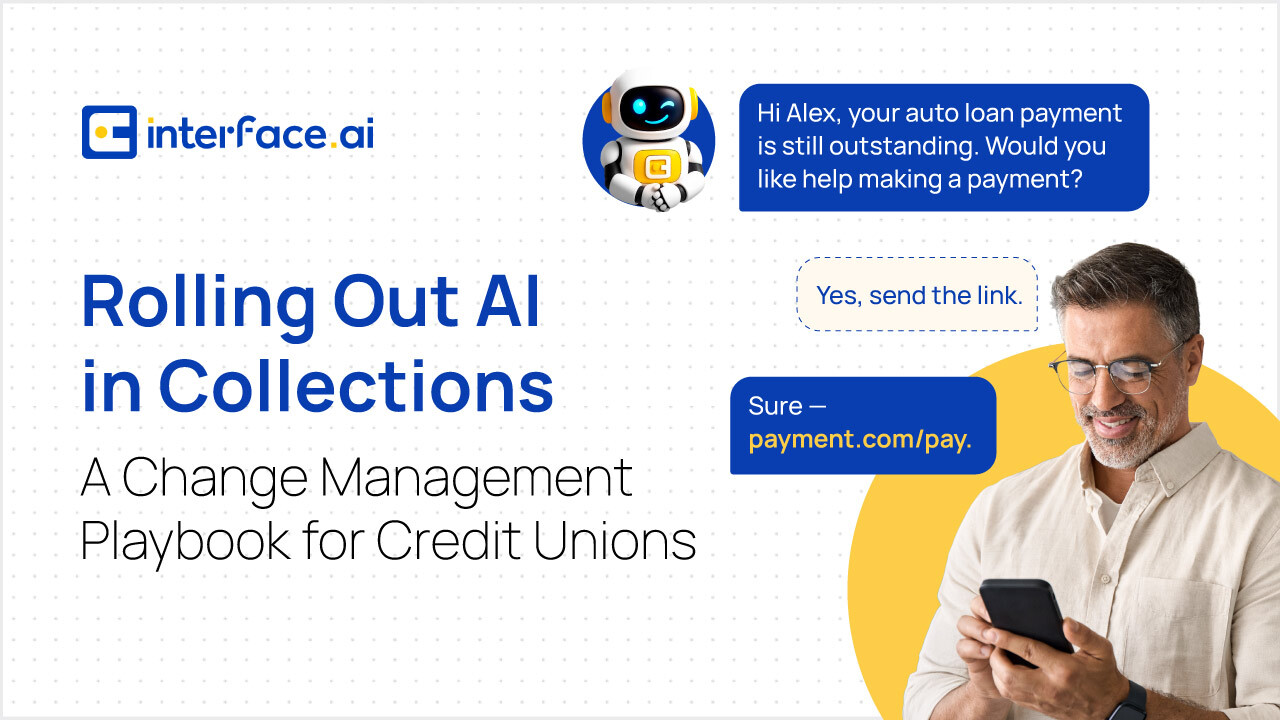
Rolling Out AI in Collections: A Change Management Playbook for Credit Unions
Paid
Members
Public
Collections leaders at credit unions face a constant tension: you need to engage delinquent members earlier – when cures are still likely – but every outreach attempt carries reputational and regulatory risk. At…