For years, “self-service” has been the north star for digital banking. IVR menus. Mobile apps. FAQ pages. Basic chatbots.
These tools were meant to give members and customers independence – a way to get quick answers without waiting on hold, requiring agent support, or visiting a branch. But over time, something became clear:
Self-service doesn’t always mean problem solved.
Today’s consumers don’t want to hunt for answers, navigate menus, or repeat information across channels. They want resolution – fast, accurate, and effortless. And many legacy tools were never built for that.
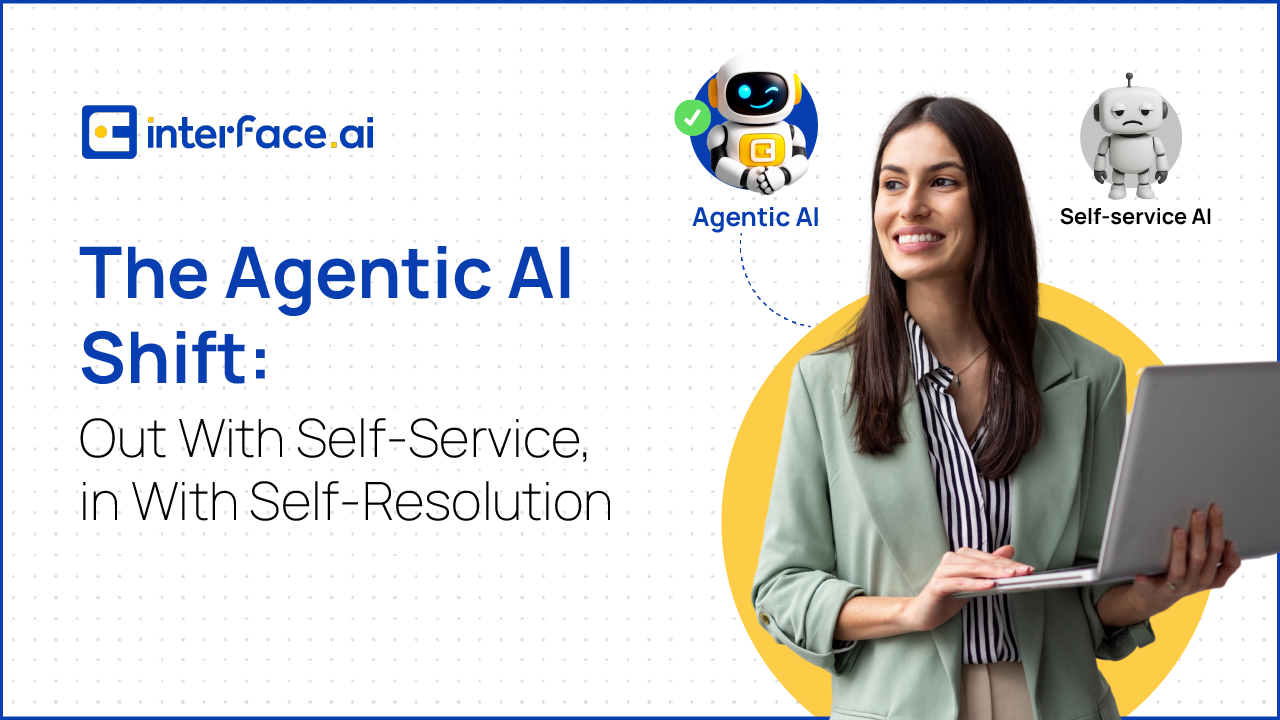
That’s why the industry is now undergoing a fundamental shift powered by agentic AI. Agentic AI just doesn’t help users self-serve. It helps them self-solve, end-to-end, with no human intervention.
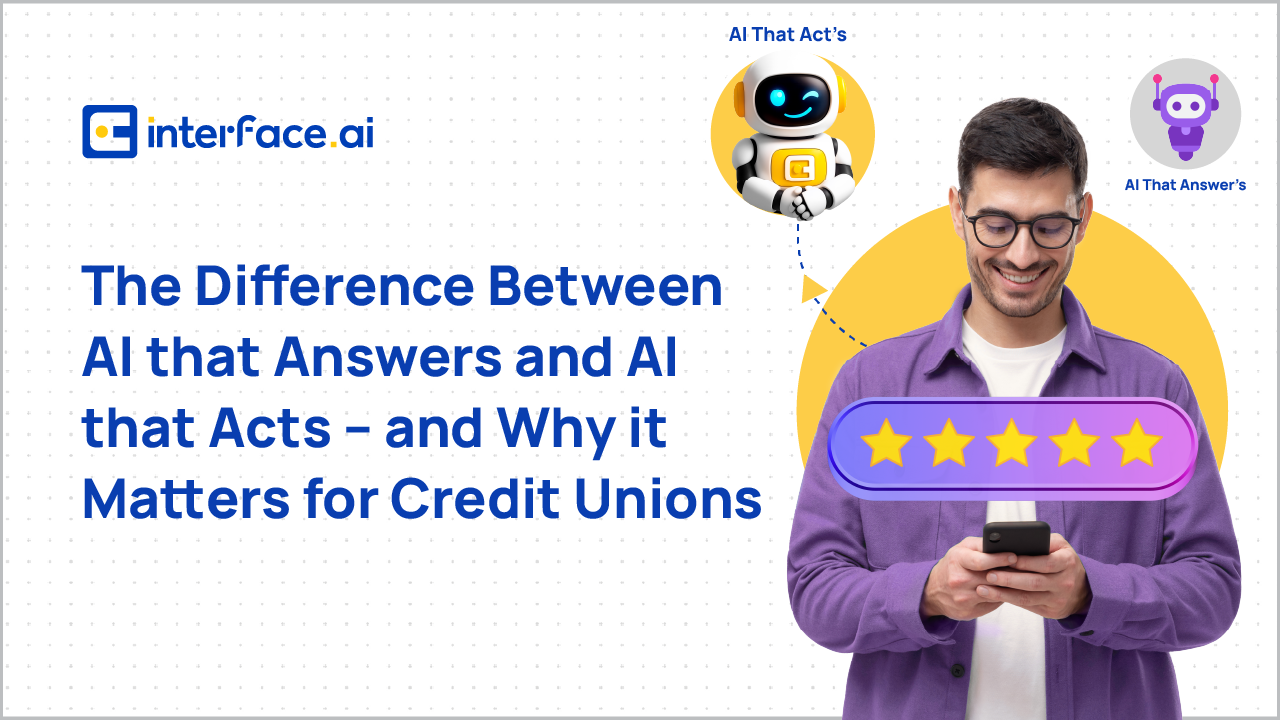
Self-service helps. Agentic AI completes.
Self-service isn’t obsolete. It still plays an important role in the banking experience. Mobile apps, IVR, and online FAQs give members quick access to information and a way to handle simple tasks on their own.
But technology – and expectations – have evolved. Most self-service tools were built for a time when getting an answer quickly was the goal. Today, the goal is different: complete the task, end-to-end, without switching channels or waiting for help.
That’s why agentic AI has become the next essential layer of the modern banking experience. Agentic AI doesn’t just guide members toward the right place – it takes them all the way through. It understands intent, reasons through what needs to happen, and acts across systems to complete the task.
Agentic AI in action
Here’s what that difference looks like in a real banking scenario when a member calls their credit union:
Member request: “Hey, I’m looking to buy an iPhone for about $850. Do you think I can afford one?”
What traditional self-service AI does:
- Gives a generic reply like: “You can check your balances in online banking or the mobile app.”
- Provides a link to log in
- Suggests contacting a representative for financial guidance
- Potentially misinterprets the intent as a “balance inquiry,” not a financial decision
- Ultimately puts the work back on the member. The member is left to figure it out themselves.
What agentic AI does instead:
- Understands the real intent: “Does my financial situation support this purchase?”
- Authenticates the member
- Reviews balances across multiple accounts
- Evaluates whether the purchase is feasible
- Provides personalized guidance: “You have $1,000 in vacation savings and $750 in checking – you can afford the $850 phone.”
- Offers follow-through options (e.g., which account to use, transferring funds, or planning the purchase)
This is real financial decision support – something scripted self-service tools simply cannot do.
You can hear this real-world example in the video below. Or put self-service vs self-resolution to the test yourself. Choose a request and see how a self-service AI solution responds, and how an agentic AI agent responds.