
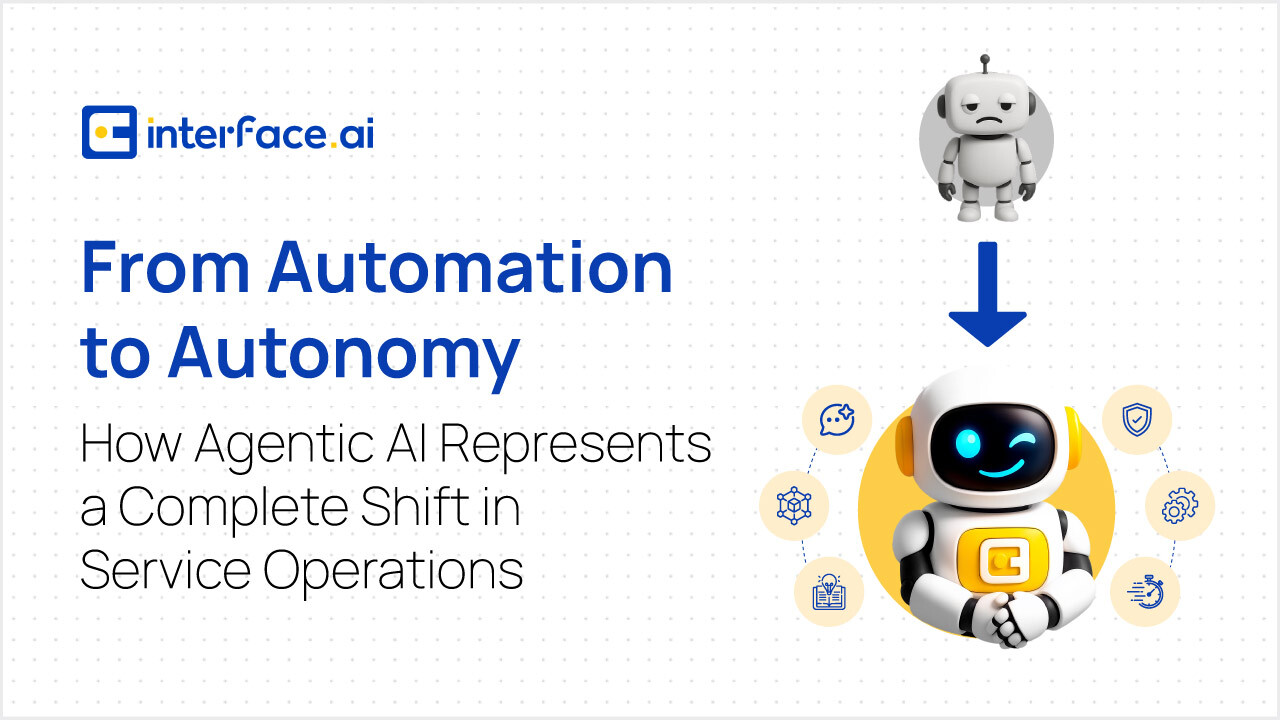
From Automation to Autonomy: How Agentic AI Represents a Complete Shift in Service Operations

The first wave of AI in banking was built around automation.
Its goal was straightforward: reduce manual workload, streamline repetitive tasks, and improve efficiency inside the contact center. For credit unions and community banks, that approach delivered measurable benefits – shorter handle times, lower call volumes, and incremental cost savings.
But traditional automation was designed to follow scripts. Agentic AI is designed to operate.
That distinction represents a fundamental shift in service operations – from systems that execute predefined workflows to systems that understand context, make decisions within guardrails, and take secure action on behalf of members.
For institutions under pressure to improve service levels while controlling costs, that shift changes what’s possible.
The Limits of Automation-First Service Models
Automation-focused AI systems were effective at predictable, high-volume interactions:
- Balance inquiries
- Transaction lookups
- Password resets
- Basic loan and card servicing
These systems relied on structured intents and decision trees. When interactions fit expected patterns, they performed well. But service operations are rarely that clean.
Members combine requests. They describe situations instead of issuing commands. They introduce nuance – urgency, travel plans, hardship concerns, fraud anxiety. In those moments, traditional automation reaches its limits. It either provides generic information or escalates immediately to a live agent – even when much of the request could have been resolved intelligently.
As a result, contact centers remain burdened. Staff handle repetitive work. Wait times rise during peak periods. And scaling service still requires scaling headcount.
Automation improved efficiency at the margins. But it arguably did not fundamentally transform service operations.
What Agentic AI Autonomy Changes
Agentic AI introduces a different operating model for service operations.
Traditional automation is reactive. It matches inputs to predefined intents and triggers scripted workflows. When interactions fall outside those paths, escalation is the default.
Autonomous systems operate with greater flexibility and capability. They can interpret conversational intent without relying on rigid keywords. They maintain context across multi-step interactions instead of resetting at each stage. They securely access data across core and ancillary systems – not just to retrieve information, but to evaluate it against policy and determine next steps.
Most importantly, Agentic AI can take action. Within defined compliance guardrails, it can initiate transactions, update records, trigger workflows, and complete service requests. It shifts from being an informational interface to becoming an operational layer embedded inside service delivery.
When judgment or empathy is required, escalation includes full context – enabling staff to engage immediately rather than start from scratch.
Automation speeds up tasks. Agentic AI autonomy expands operational capability.
Why Agentic AI Matters for Credit Unions and Community Banks
For community institutions, service quality is a primary differentiator. But maintaining high-touch service while managing rising volumes has become increasingly difficult. Agentic AI changes the economics of scale.
By autonomously resolving a significant portion of routine – and increasingly semi-complex – interactions, institutions can:
- Provide consistent 24/7 support
- Reduce contact center congestion
- Improve first-contact resolution
- Maintain service levels during growth
- Free employees to focus on advisory and relationship-building conversations
More importantly, autonomy shifts AI from a cost-containment tool to a capability expansion strategy.
Service operations move beyond reactive information delivery. They become intelligent and action-oriented. The system itself can navigate processes, complete workflows, and prepare context for human staff when expertise or empathy is required.
That escalation path strengthens – rather than replaces – the human element. When interactions require judgment, AI transfers complete context, allowing staff to focus on solving problems instead of gathering background.
Wrap-up
Agentic AI represents a complete shift in service operations because it enables systems to understand context, make secure decisions, and take meaningful action at scale.
For credit unions and community banks, this is not about replacing people. It is about redesigning operations so people can focus where they add the most value.
interface.ai enables financial institutions to deploy secure, compliant Agentic AI across voice, chat, and employee channels – helping institutions move beyond scripted automation and into intelligent, action-oriented operations.
If you’re exploring how to modernize service, our team would welcome the conversation. Book a chat with our AI experts today!
AI Insights for Credit Union & Community Bank Leaders
Join the monthly newsletter for all the latest industry updates
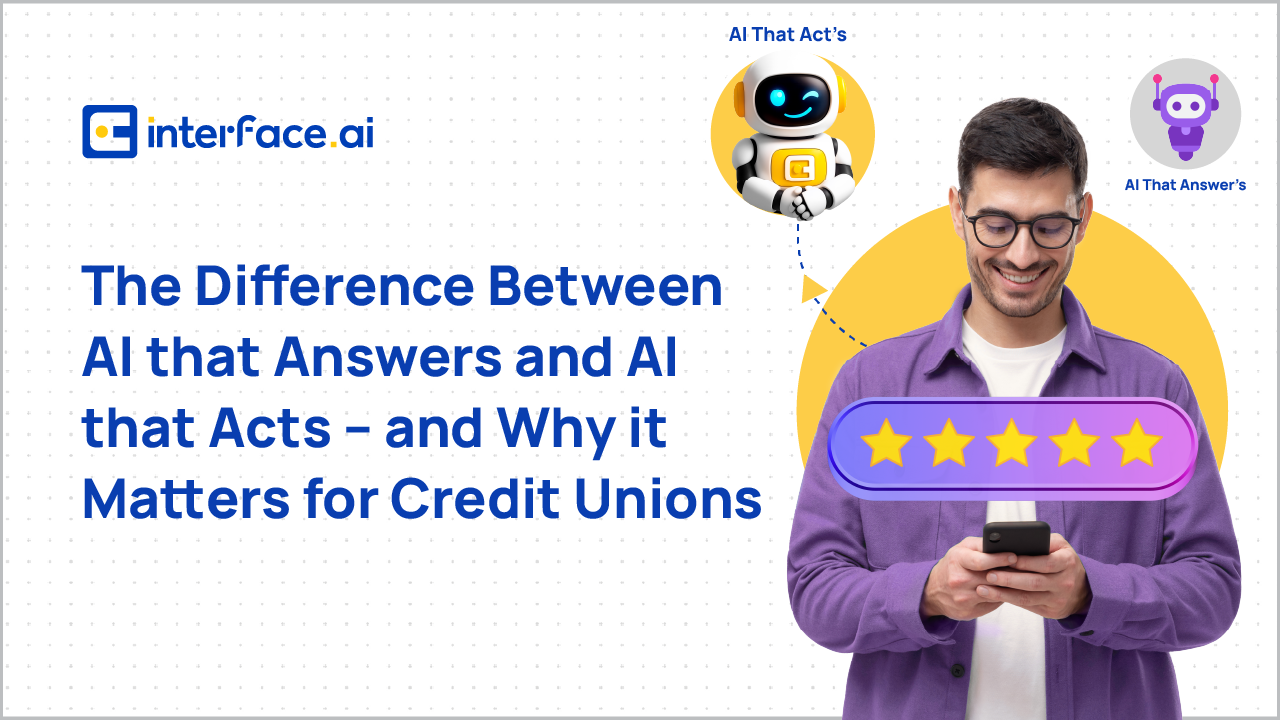
The Difference Between AI that Answers and AI that Acts – and Why it Matters for Credit Unions
Paid
Members
Public
A member calls to move money between accounts. Your AI answers. It tells her the balance. It confirms that yes, transfers are something the credit union offers. It suggests she log into online…
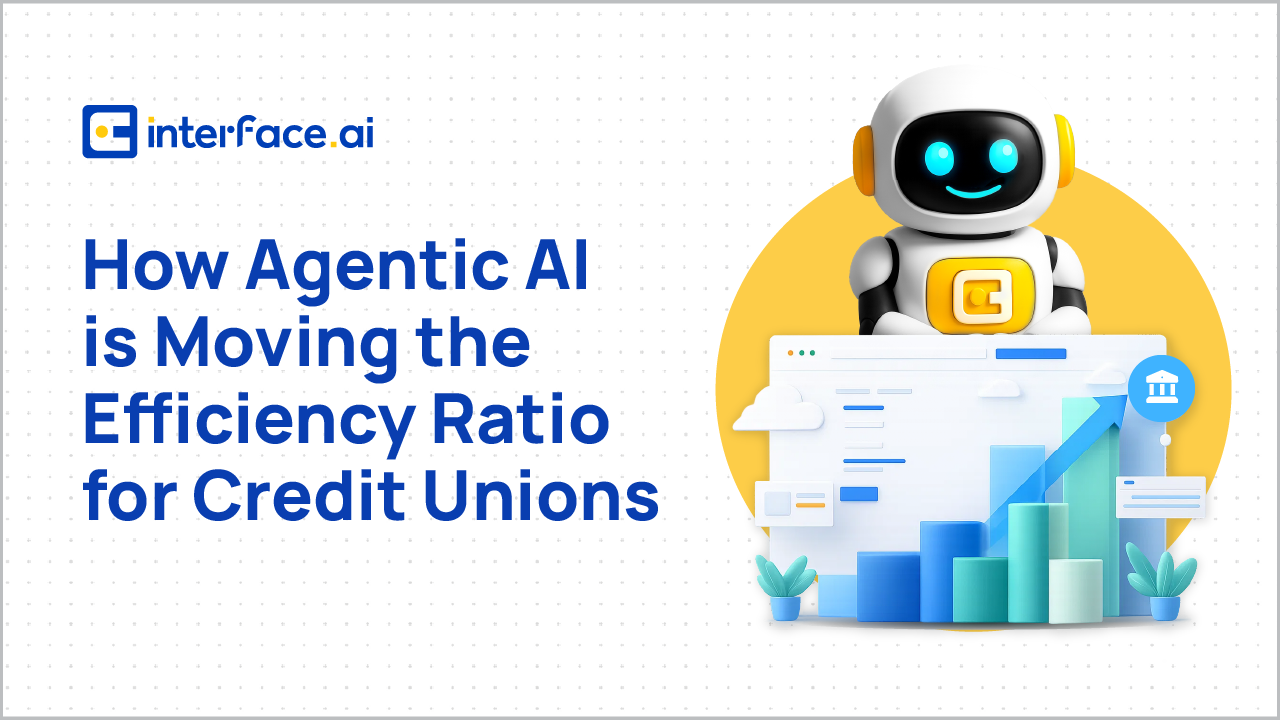
How Agentic AI is Moving the Efficiency Ratio for Credit Unions
Paid
Members
Public
In a CUInsight webinar featuring Navigator Credit Union and Red Rocks Credit Union, the conversation focused on what AI in the contact center looks like in production—not in pilots or theory, but at…