
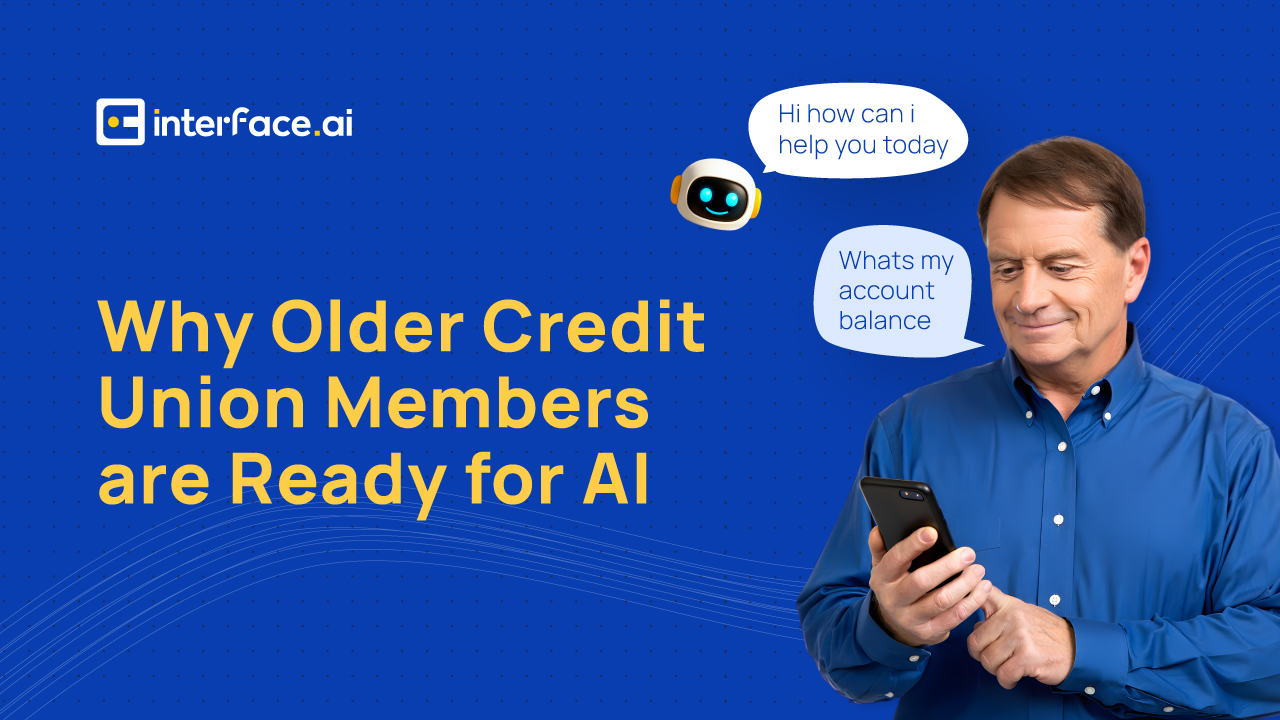
Why Older Credit Union Members are Ready for AI

There’s a long-standing assumption in financial services that AI is “for younger generations” – that older members are resistant to new technology and prefer traditional, human-only service models.
But real-world adoption is beginning to tell a different story.
Across industries, older adults are increasingly using AI-powered tools in their daily lives. Not because they’re chasing innovation, but because these tools reduce friction, save time, and make routine interactions easier. When AI is designed to be intuitive and accessible, age is no longer a barrier – value is the deciding factor.
The data: Older adults are already using AI
According to a national poll from the University of Michigan, 55% of people age 50 and older reported having used AI technologies they speak or type to, including voice assistants like Alexa, Siri, and Google Assistant as well as conversational AI interfaces like ChatGPT or Copilot.
Use isn’t just a one-off experiment. Among older adults who have tried AI, those with experience report higher confidence in identifying and interacting with AI technology compared with peers who haven’t used it – indicating repeat exposure builds comfort and perceived competence.
This pattern is familiar to credit unions. It closely resembles earlier adoption curves for online banking and mobile services: slower initial experimentation, followed by steady, sustained use once the value is clear and the experience feels reliable.
Other consumer data reflects this same pattern: nearly one in three adults age 50 and over have integrated AI voice assistants into everyday tasks, such as information search, entertainment, and utility tasks, suggesting these tools are becoming familiar parts of their digital routines.
The takeaway is straightforward: older members aren’t avoiding AI. They’re adopting it on their own terms.
Why voice-first AI works for older members
The form AI takes matters as much as the function it performs.
Voice-first interactions remove many of the barriers that have historically complicated digital experiences for older users – small screens, dense interfaces, and multi-step navigation. Speaking a question out loud feels natural. Getting a clear, immediate answer builds confidence.
Research into conversational AI consistently shows that older adults respond best to systems that prioritize clarity, predictability, and human-like dialogue. When AI communicates plainly and keeps interactions focused, it feels less like technology and more like service.
In other words, success doesn’t come from making AI sound “advanced.” It comes from making it feel dependable.
Designing AI that serves every generation
Adoption isn’t driven by age – it’s driven by design. AI that works well for older members follows a few core principles:
- Clear, conversational language instead of technical or promotional phrasing
- Simple interaction paths that don’t require visual navigation or app downloads
- Continuity within a single conversation, without forcing repetition
- Easy access to a human when needed
These choices don’t limit innovation. They expand it. The same design decisions that help older members feel confident using AI also improve the experience for younger members who value speed and efficiency.
Inclusive design isn’t a compromise. It’s how AI scales.
The results: Better experience, broader impact
When older members feel comfortable using AI, the benefits extend across the credit union.
Routine questions are resolved faster. Members get answers when they need them, without waiting. Contact center teams gain capacity to focus on complex, relationship-driven interactions. Satisfaction improves – not just among one demographic, but across the membership.
Perhaps most importantly, confidence compounds. Older members who have positive early experiences with AI are more likely to keep using it, recommend it, and rely on it for additional needs. Adoption becomes durable, not experimental.
Take Securityplus Federal Credit Union, as an example. With interface.ai’s Voice AI Agent, member adoption sits at over 92%.
Looking ahead – Inclusive AI is the future of banking
AI isn’t a generational trend. It’s becoming a universal service layer – one that works best when it’s designed for real people, not assumptions.
For credit unions, the opportunity is clear. The institutions that win with AI won’t be the ones chasing the youngest users. They’ll be the ones delivering accessible, intuitive experiences that every member can use – and trust – from the first interaction. Financial wellness for all means building technology that meets members where they are today, and evolves with them tomorrow.
Interested in how Voice AI can improve accessibility and service across your entire membership? Let’s explore what inclusive AI can do. Reach out to our AI experts to begin your AI journey.
AI Insights for Credit Union & Community Bank Leaders
Join the monthly newsletter for all the latest industry updates
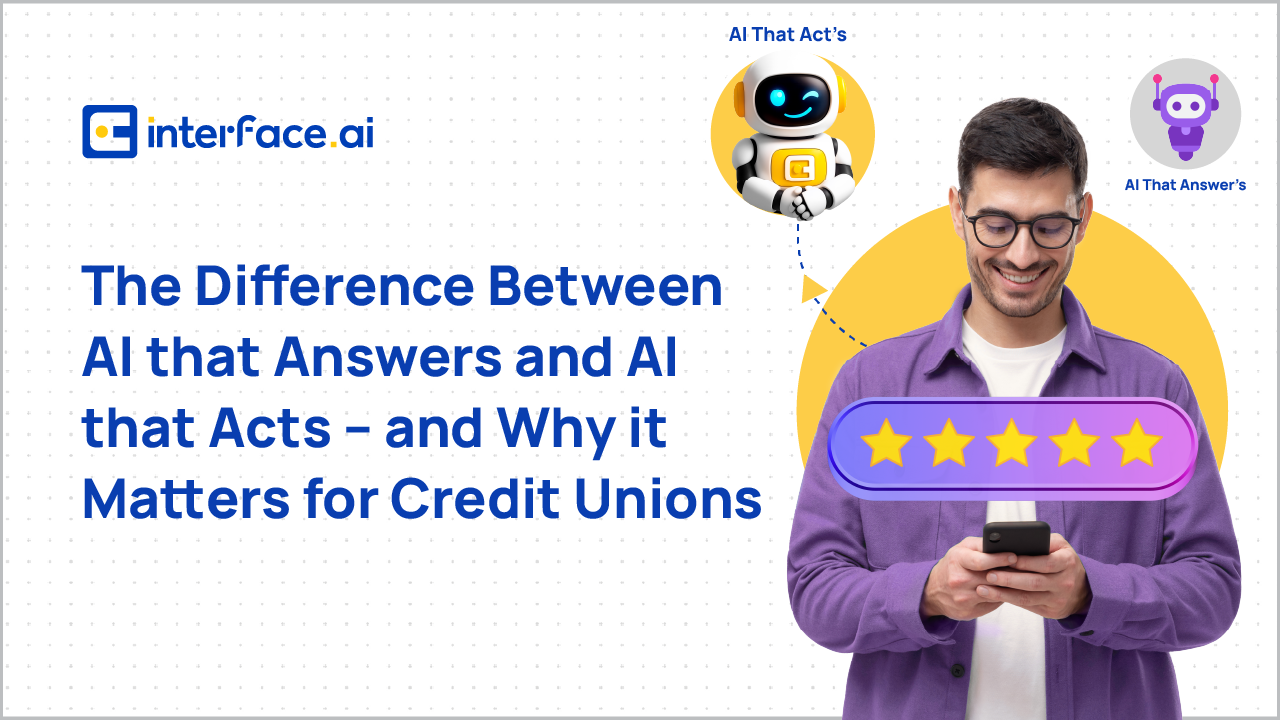
The Difference Between AI that Answers and AI that Acts – and Why it Matters for Credit Unions
Paid
Members
Public
A member calls to move money between accounts. Your AI answers. It tells her the balance. It confirms that yes, transfers are something the credit union offers. It suggests she log into online…
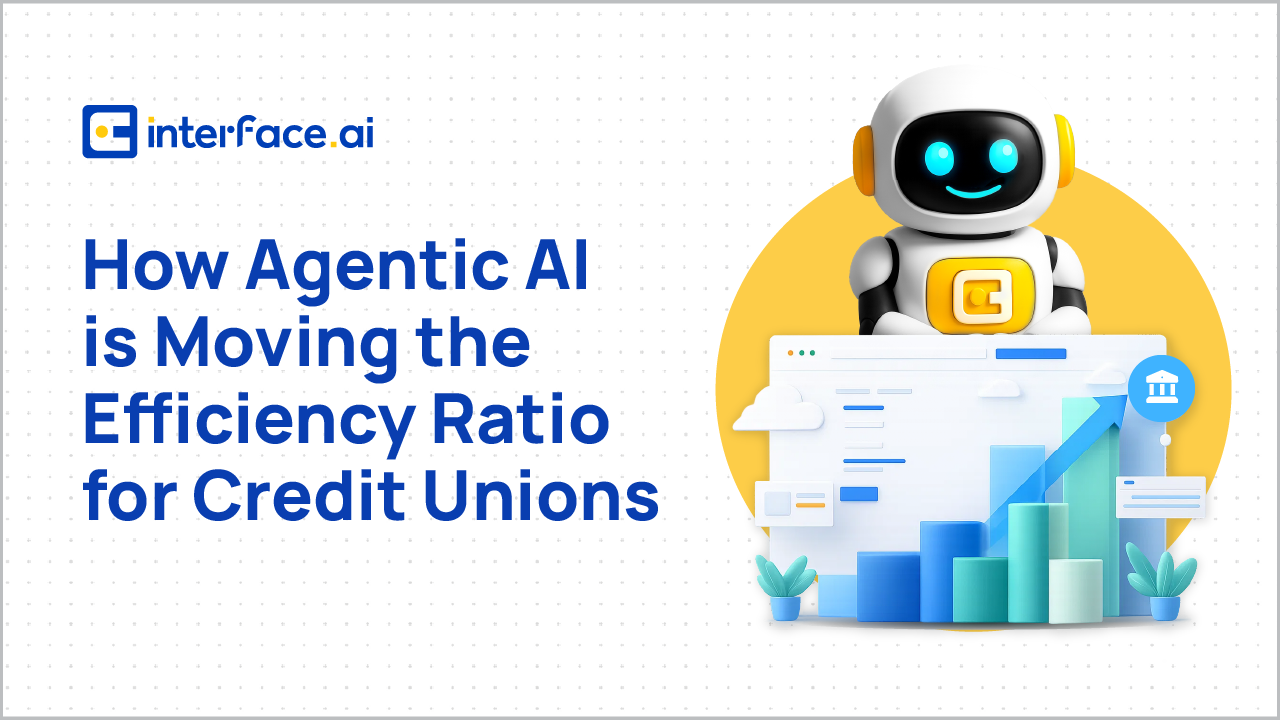
How Agentic AI is Moving the Efficiency Ratio for Credit Unions
Paid
Members
Public
In a CUInsight webinar featuring Navigator Credit Union and Red Rocks Credit Union, the conversation focused on what AI in the contact center looks like in production—not in pilots or theory, but at…